Modern AV Solutions for University Lecture Halls and Academic Spaces
How University Teaching Environments Are Changing
AV technology is already making a massive impact on universities, particularly since COVID-19 necessitated blended learning. Many institutions now allow remote participation at a scale once unheard of, and lecture halls may have capture systems, multi-camera setups, and high-quality microphones to accommodate this.
Even without catering to remote students, universities are now more likely to have 4K-equipped displays, such as video walls, to show presentations and lecture slides on a far larger scale. It’s not uncommon for universities to stay projector-centric, but even then, they might use a modern microphone setup, such as a beamforming mic that focuses on the lecturer.
These are just some of the more “normal” changes; other, more innovative sites are embracing matrix switchers, auto-tracking cameras, and even virtual reality.
Key AV Requirements in Modern Lecture Halls
Every lecture hall and university is different, so what classes as essential to one might not even be on the list for another. However, some common fixtures on modern campuses include:
-
High-brightness laser projectors
-
4K-equipped LED/LCD displays
-
Distributed loudspeakers
-
Wireless lapel or headset mics
-
Ceiling array mics for audience questions
-
Integrated recording system
-
PTZ (pan-tilt-zoom) cameras
-
Control panels for instant “presentation mode”
-
Zoned lighting control
-
Live captioning on streamed lectures
These are just some of the innovations your university could already use. Realistically, you can integrate all of these and much more. At a minimum, you should have modern microphones and displays, plus some accessibility measures.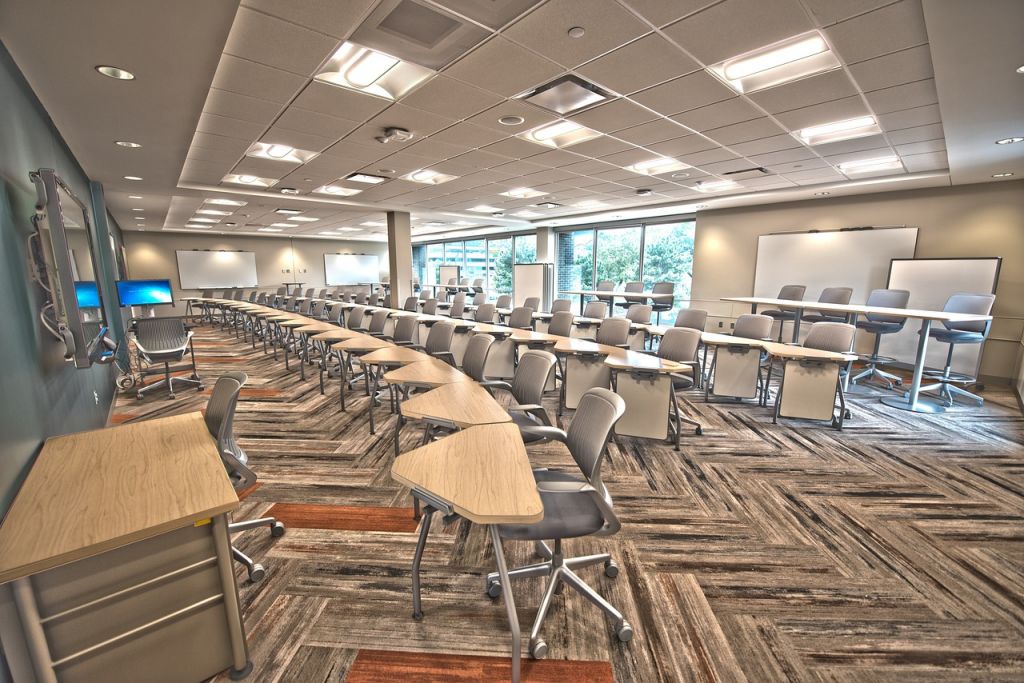
How AV Equipment Supports Academic Collaboration
Universities are ultimately collaborative environments where students come together to learn as much as possible from lecturers and from each other. AV equipment helps facilitate this.
For example, hybrid lectures may include students from other parts of the country (or the world) streaming in. High-quality AV equipment helps them stay involved, and they can even give their own perspective via shared digital whiteboards.
In a more physical setting, ceiling array mics empower students to ask questions by letting their voices be heard throughout the room. Plus, higher-quality displays help students see a lecture’s content more clearly, improving their ability to contribute to group discussions.
Traditionally, lectures are one person talking at a cohort of students - but AV equipment lets this format finally enter the 21st century.
Managing Multiple Video Sources in Academic Spaces
You can manage these sources by clarifying which ones are essential for that specific room. For a lecture hall, for example, you might prioritize:
-
PTZ cameras
-
Presentation content (such as via a laptop)
-
Document cameras
-
Digital whiteboards
-
Video conferencing platforms
Don’t force every possible video source or AV tool into every space for the sake of it; it’s best to keep things simple instead. Over-engineering could just complicate things for your lecturers.
Matrix switchers are also very useful for managing complex input/output systems. These let you route different inputs to different outputs. For example, lecturers won’t have to mess with cables every time they want to switch what’s on their main display. They can simply reroute the inputs.
Lessons from Real University AV Projects
Many universities have already embraced AV technology. Two standout examples here include LUMSA University in Italy and Bath Spa University in England, both of which have used Dexon solutions.
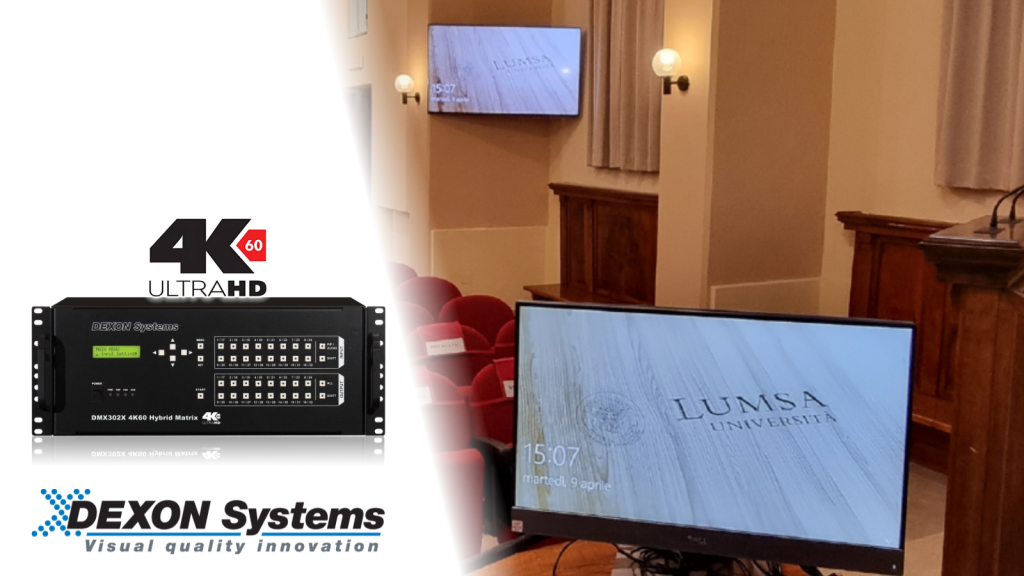
LUMSA’s Palermo conference room sits within its Aula Magna building and can now serve as an international conference space. At the heart of this is a microphone-driven PTZ camera system - this means the cameras actively follow the speaker as they talk. Dexon matrix switchers also let speakers seamlessly change their sources and signals.
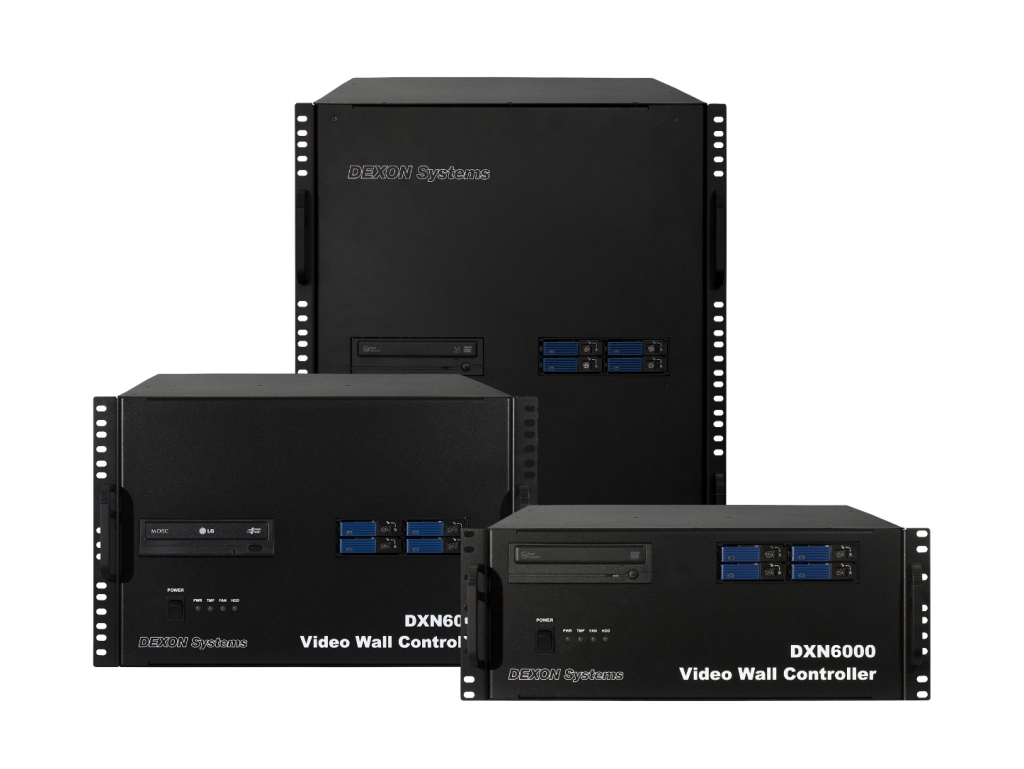
Meanwhile, Bath Spa University used Dexon’s video wall controller for an artistic installation that reflects the institution’s focus on creative arts. This 7.35 x 3.75 m video wall showcases student artwork in the reception area. The DXN controller was chosen specifically for its synchronization and pixel-perfect quality, bolstered further by narrow-bezel Samsung screens.
Long-Term Benefits of Well-Designed University AV Systems
Robust AV setups can help universities stand apart as champions of the modern digital age, but there are also a number of benefits beyond this. These include:
-
Better teaching: Staff won’t wrestle with unwieldy technology as much
-
Improved learning: Students will be engaged and more able to contribute
-
Future-proofing: Spaces can embrace hybrid learning and outpace other universities
-
Inclusivity: Captioning and hybrid learning make learning accessible to all
-
Resilience: Universities can stay “open” and provide learning during disruptions
-
Better decisions: Adoption and usage analytics show what works and what doesn’t
All of these have the capacity to change your university’s teaching experience for the better over time. For example, AV technology that ensures inclusivity and accessibility helps an institution’s reputation and helps it attract more high-level students.
.png)
AV as a Core Part of the Modern University Experience
Most universities today rely on AV to deliver their lectures - whether that’s through a projector or a large-scale video wall, or even through Zoom alone. The right tools could even boost learning outcomes and collaboration while letting your lecturers’ presentations thrive.