AV-over-IP and the SDVoE Standard: What Is the Real Difference and When to Use Which?
The conversation surrounding AV-over-IP vs. SDVoE often doesn’t reflect that they’re effectively two sides of the same coin. SDVoE is a high-performance AV-over-IP standard used primarily in control rooms, broadcasting, and other sectors where latency isn’t an option. However, there are still plenty of environments where “traditional” AV-over-IP is the way forward.
In this post, we’ll explain the distinction between AV-over-IP and SDVoE, including when it’s best to use the latter and when you should try other approaches.
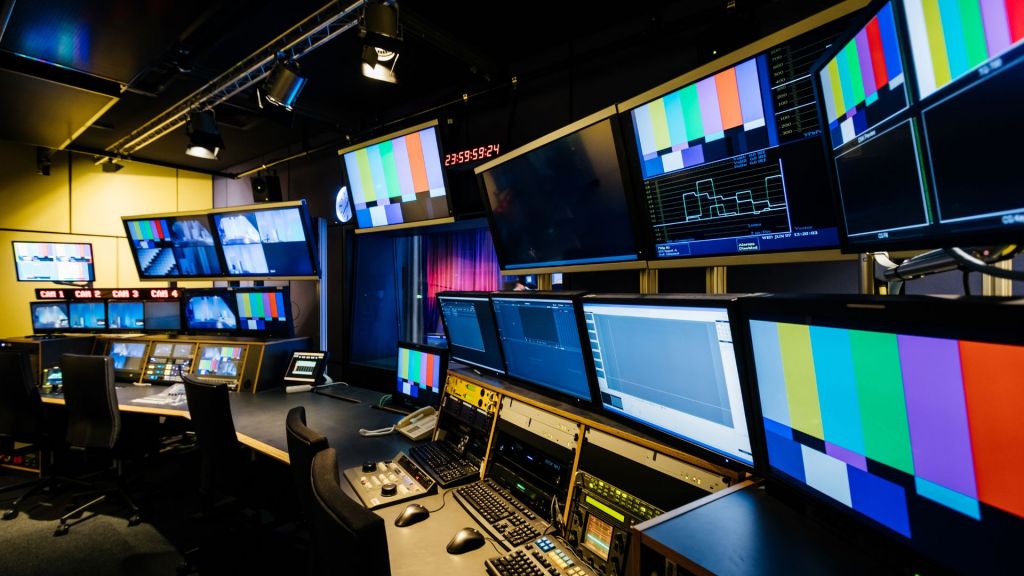
Why This Comparison is Often Misunderstood
Technically speaking, AV-over-IP and SDVoE aren’t at odds with one another. SDVoE is actually a form of AV-over-IP.
We can put this down to marketing ambiguity; many products are marketed as AV-over-IP while avoiding any mentions of latency, compression methods, and bandwidth. In addition, AV-over-IP covers an incredibly wide spectrum of products – many of which have different goals to SDVoE.
The whole SDVoE ecosystem was designed around lossless video with near-zero latency. Most AV-over-IP architectures can’t measure up to this, so many believe they are two separate things.
What is AV-over-IP?
AV-over-IP (Audio Visual over Internet Protocol) is audiovisual content transmitted over Ethernet and IP networks, without typical AV cabling. Instead of using a cable for every source-to-display path, these systems turn media data into packets and send them through the network.
AV-over-IP is used for video walls, matrix switching, video distribution, multiviewers, and more. It also varies wildly in terms of architecture. Some systems will embrace compression while others work to avoid it, and they can use anything from 1 to over 25 Gbps (gigabits per second).
What is the SDVoE Standard?
SDVoE (Software-Defined Video over Ethernet) is a specific AV-over-IP ecosystem designed for high-bandwidth environments that maintains virtually no latency. In practice, this means lossless 4K (or even 8K) video, as well as real-time switching on 10 Gbps networks.
SDVoE is usually deployed in situations where even a slight delay could pose serious problems, such as mission-critical control rooms, live events, or simulation environments.
This architecture prioritizes both quality and responsiveness. This is why it requires 10GbE and enterprise-grade infrastructure. Otherwise, it would have to make the same trade-off that nearly every other AV-over-IP setup does.
SDVoE Within the AV-over-IP Ecosystem
AV-over-IP is already a significant shift away from “traditional” audiovisual systems that relied on HDMI matrices and SDI routers. Within the new Ethernet-driven ecosystem, the SDVoE Alliance was formed to standardize AV-over-IP while balancing low latency and high quality.
SDVoE is essentially a high-performance “branch” within AV-over-IP, and a sharp contrast to the compressed streaming approach, which is built to run even on 1 Gbps networks. SDVoE utilizes 10 Gbps, a model that the SDVoE Alliance has dubbed the “Power of 10” due to its:
● Zero latency
● No compression
● Scalability support
● Instant switching
● Energy efficiency
● And more
Of course, the SDVoE standard isn’t always easy to achieve, given the aforementioned need for high-level infrastructure. It only works if there is substantial bandwidth without any trade-offs.
When to Use SDVoE in AV Projects
SDVoE is practically required in certain sectors and settings. Here are just a few examples.
Control Rooms
Control rooms often handle time-sensitive situations, such as security incidents. SDVoE enables users to instantly switch between inputs, such as security camera feeds showing multiple angles of the same incident. SDVoE also helps synchronize video walls, which are usually important for large-scale data monitoring.
Broadcasting
A live television environment usually needs real-time camera switching and high-quality signals, which in traditional broadcasting is achieved with large hardware switchers. SDVoE, meanwhile, can handle instant cuts with little to no delay while maintaining full visual fidelity, keeping even a live feed in the highest possible quality.
Training Systems
Simulators and other training systems need real-time interaction, otherwise they simply aren’t fit for purpose. SDVoE AV network design ensures ultra-low latency, preventing half-second delays that break user immersion. It also offers enhanced realism by making sure every asset has high detail and fidelity.
When Other AV-over-IP Approaches Are Better
When transporting AV signals, SDVoE technology consumes significant bandwidth to make sure latency and visual artifacts aren’t serious problems. However, plenty of sectors don’t require this level of performance, so they are willing to make trade-offs when necessary.
Here are just a few situations where AV-over-IP vs. SDVoE works out in the former’s favor:
● Limited bandwidth: 1GbE infrastructure is still quite common. If your system can’t reach 10GbE, then 1GbE with compression is generally good enough.
● High endpoint costs: SDVoE-ready infrastructure is expensive. A large AV deployment may simply default to traditional AV-over-IP’s cheaper switching.
● Wide distribution: Streaming-based AV-over-IP is much better for long-distance signal transmission, in part because it is well-optimized for LAN transport.
● No need for zero latency: No latency is a plus, but few settings require it. Public signs, lectures, and many other AV setups can handle 100-300 ms of lag.
● Scalability: SDVoE is definitely scalable, but traditional AV-over-IP is easier to scale up, mainly because each stream uses less bandwidth and costs less.
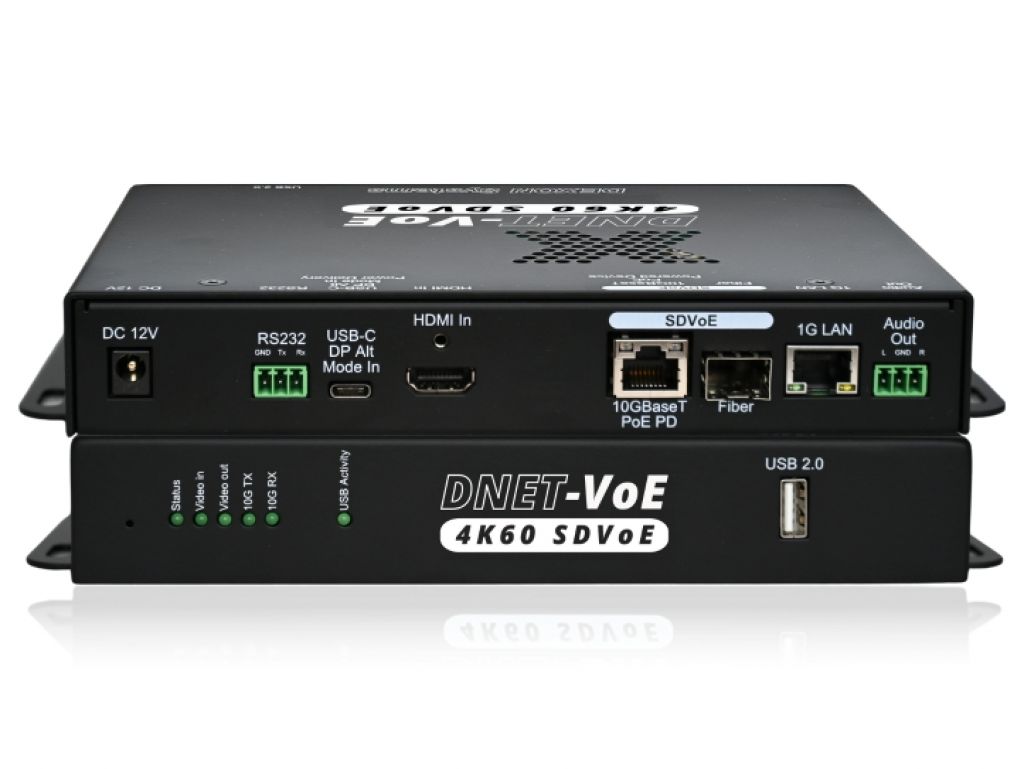
The DEXON DNET-VoES, DNET-VoER boxes and the DNET-VCON box form a full featured audio-video transmission system for demanding projects. They handle HDMI input sources and transfer them to HDMI outputs where the 4K60 4:4:4 resolution can cover unlimited distances. They provide SDVoE compliant solution as matrix switchers, video processors or multiviewers.
Designing Based on Architecture
AV-over-IP vs. SDVoE is naturally one of your main considerations when building an audiovisual ecosystem. If you can’t afford lag or compression in your day-to-day operations, SDVoE may be the only way forward.
At DEXON Systems, our SDVoE transmitters and receivers are ideal for demanding AV setups. Contact us today to learn more about these systems and what we have to offer.